Facebook has over two billion active users. It's free, easy to set up, and gives businesses a way to post updates, share photos, collect reviews, and interact with customers. For many small businesses, especially in markets where Facebook usage is high, it's become the default online presence.
The problem isn't that Facebook is bad. The problem is that it creates a false sense of having an online presence. A Facebook page is not a website. And the gap between the two — in terms of what your business can do, own, and control — is larger than most people appreciate.
What Facebook can't give you
Facebook's fundamental limitation is that it's rented land. You build your audience, your content library, and your customer relationships on infrastructure you don't own, under rules you don't control, on an algorithm you can't predict.
Facebook has changed its algorithm multiple times in ways that dramatically reduced the organic reach of business pages. Businesses that spent years building audiences found overnight that their posts were reaching a fraction of their followers without paid promotion. They had no recourse — the platform changed the rules unilaterally, and the businesses adapted or paid.
That's the nature of building on someone else's platform. A website is yours. The content, the design, the customer data, the ranking you build in search engines — all of it is yours, and none of it can be taken away by a policy change at a social media company.
Control over your presence
A website gives you control that a Facebook page fundamentally cannot. You control the design — not within template constraints, but completely. You control the customer experience from the first page to the final checkout. You control what information is shown, how it's organized, and what actions you're asking visitors to take.
Facebook pages look like Facebook pages. A professional website looks like your brand.
You also control the functionality. Need a booking system? A product configurator? A client portal? A live chat widget? A website can integrate all of these. A Facebook page cannot.
Search engine visibility
When someone searches Google for "software development company Beirut" or "accounting software Lebanon," Facebook pages rarely appear at the top of the results. Websites do.
Search engine optimization (SEO) is the practice of making your website appear higher in search results for relevant terms. It's one of the most cost-effective long-term marketing channels available — because once you rank, you receive traffic without ongoing cost per click. Facebook pages have almost no SEO value.
A well-optimized website can bring you customers who have never heard of your business, who found you because they searched for exactly what you offer. That kind of organic discovery is impossible to replicate on Facebook.
Data collection
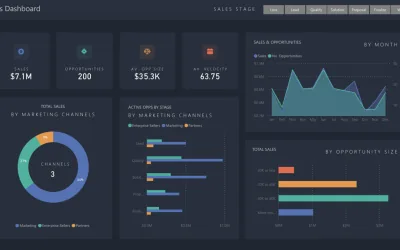
A website gives you data about your visitors that Facebook withholds from you. Who visited, what pages they looked at, how long they spent, where they came from, what they clicked on, where they dropped off — all of this is available through analytics tools like Google Analytics, and it's invaluable for improving your business.
This data lets you understand your audience — what they're looking for, what's working, and what isn't. You can run A/B tests, improve conversion rates, identify your most valuable content, and make marketing decisions based on evidence rather than guesswork.
Facebook provides some analytics for business pages, but it's intentionally limited. The data you can access is what Facebook chooses to share with you, not the complete picture of how people interact with your content.
Credibility & trust
Consumer trust is increasingly correlated with having a professional website. When someone considers doing business with you, one of the first things they do is look you up online. If they find only a Facebook page, many will hesitate — not because Facebook pages are unprofessional, but because a real business website signals investment, seriousness, and permanence.
A professional website establishes credibility in ways a Facebook page can't: detailed case studies, client testimonials with full context, a clear explanation of your services and process, team profiles, contact information that goes beyond a Facebook message button. These elements build trust before a conversation even starts.
Direct sales potential
A website can sell directly. E-commerce functionality, service booking, quote request forms, subscription sign-ups, downloadable products — all of these can be integrated into a website and generate revenue around the clock. Facebook has limited e-commerce capabilities and charges significant transaction fees for its shop functionality.
More importantly, a website's conversion funnel is fully in your control. You can optimize the path from "visitor" to "customer" — test different layouts, adjust messaging, simplify the checkout process — in ways that are simply not possible on a platform you don't own.
What to do next
Keep your Facebook page. It's a useful channel for community engagement, sharing content, and staying visible with existing customers. But treat it as a distribution channel, not a destination.
Your website is the destination. Everything else — Facebook posts, Instagram links, Google Ads, email campaigns — should drive traffic back to a website you own and control, where you capture leads, make sales, and build a relationship that doesn't depend on any platform's continued goodwill.
Build your presence on land you own. Use rented channels to bring people there.