I wanted to explain AI agents to my wife. I may have overdone it.
She works in the marketing department for a large company based in the Gulf. Smart, experienced, runs campaigns across multiple channels, manages a whole team. When I'd talk about AI agents and workflows and autonomous loops, her eyes would glaze over in that specific way that means "I understand the individual words, I just can't picture what this actually does."
Fair. It's abstract until you see it. So I decided to show her.
The plan
The plan was simple. I would build a small demo. Something modest — a few agents, a couple of workflows, just enough to illustrate the concept without taking too long.
A few weeks later, I had built her department.
What I actually built
In my defense — and I want to note that I am fully aware this defense is going to land badly — one thing genuinely led to another.
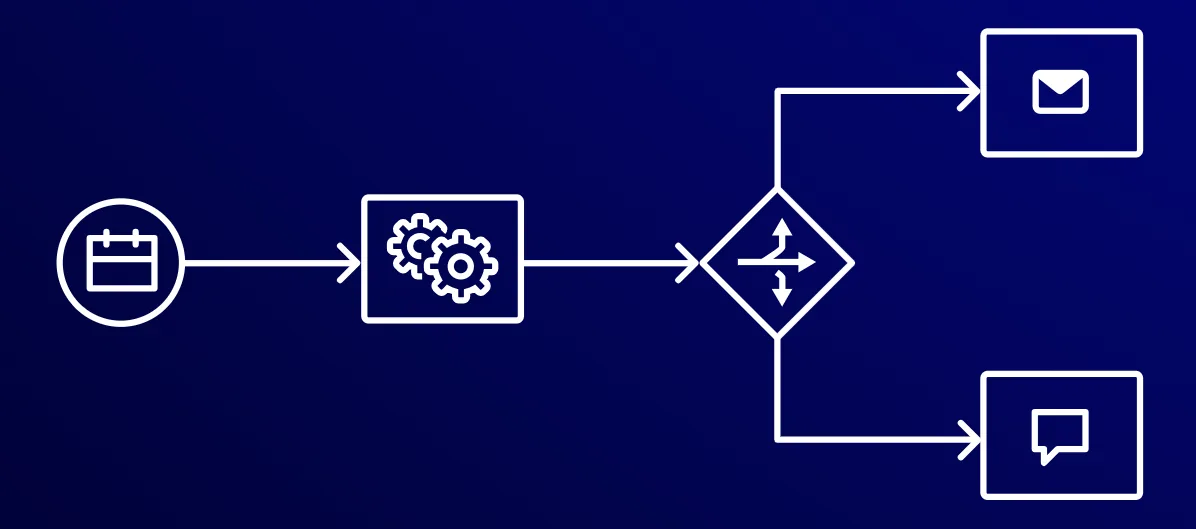
The system connects to the company's ERP. It pulls historical campaign data, looks at what worked and what didn't, what customers responded to and what they ignored. It monitors social media for brand mentions, competitor activity, and whatever gaps exist in the current marketing strategy. It reads comments. It reads between the lines of comments. It has opinions about the comments.
It doesn't just analyze. It acts. It drafts campaign concepts. It creates posts for social platforms and schedules them. It replies to customers. It A/B tests its own copy, checks engagement numbers, and adjusts the strategy mid-campaign based on what it finds. No human required unless something genuinely unusual happens — and even then, it flags the issue, documents its reasoning, and waits.
It runs 24/7. It does not call in sick. It does not have meetings about having meetings. It does not ask for a budget increase. It just works, every day, quietly, on a server.
Her entire department, running on a server.
The presentation
I set it up on a Saturday afternoon. Walked her through it. Showed her how the agents pull data, how the workflows chain together, how the system monitors a campaign and makes real-time decisions. I showed her the logs — every decision, with its reasoning, timestamped.
She watched the whole thing. Asked a few good questions. Leaned forward at one point when the system flagged a competitor campaign that was outperforming on engagement and automatically drafted a counter-response.
Then she leaned back.
Long pause.
"Turn it off."
What that means
I'm choosing to interpret this as a compliment.
The reaction wasn't confusion. She understood exactly what it did. That was precisely the problem. When something is capable enough that the immediate instinct is to shut it down rather than deploy it, you've built something real.
That's the thing about AI agents that's genuinely hard to explain in the abstract — they don't feel like automation until they're running. Then they feel like a decision you need to make: what kind of work do you want to keep doing yourself, and why?
The interesting question isn't whether the system can do the job. It's whether you want it to.
The system still exists. It lives on a server, waiting patiently, slightly over-qualified for the role I built it for. My wife still runs her department — with her team, her judgment, her years of experience navigating an industry I know nothing about.
But now she knows what an AI agent is.
I call that a win. She has not confirmed this.